Kanai's Blog
Redis 101 : From a Beginners POV
2nd October, 2025
Whenever I have talked about redis in my projects people woud think it as a cache to use . But redis is more than
that we can use redis as rate limiter, message broker and as a database ... But what is even redis, why is it even
so fast and how are we even using it . Raising all this question made me curious about this topic and so I want you
to be ...
Foundation
Lets first start with What is Cache so its simple
caching is like keeping frequently used items on your desk instead of fetching them from a storage room. Caching
stores frequently accessed data in a temporary, high-speed storage layer, reducing latency and improving performance
by minimizing redundant computations or database queries. Now Redis is our high speed
storage layer stands for remote dictionary server, its a single threaded, in memory data structure storage
model .. Which means unlike databases like PostgreSQL, MySQL which stores data on slower mechanical or solid state
drives, redis keeps all its data in RAM. This means every read and write operation happens at memory speed wihtout
the worrying about disk input / output
Why Redis is this fast ??
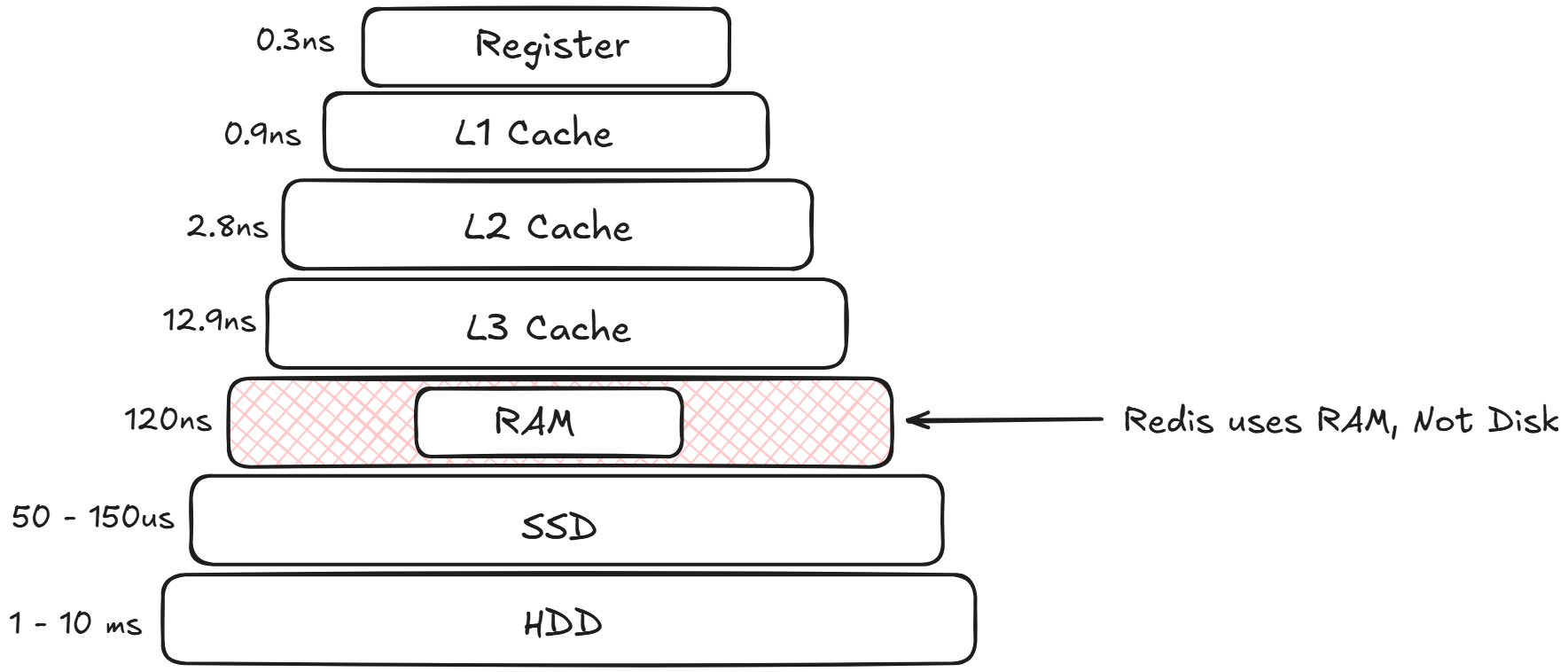
There are three main pillers behind this speed, first being the In Memory Data Storage, this is the most significant factor as accessing data from RAM is
orders of magnitude faster than from even the fastest SSDs or NVMe drives. Main memory access latency is typically
in the nanosecond range, while disk access is in the microsecond to millisecond range. By keeping the entire dataset
in RAM, redis eliminates biggest bottleneck in database systems which is disk I/O
Second reason being Single threaded command
execution, redis processes all commands on a single thread. This design avoids the overhead of
multithreading. There are no locks to acquire, no context switching between threads and no race conditions to
manage. The CPU can focus purely on executing commands sequentially without interruption, which is incredibly
efficient for the workload Redis is designed for (many small, fast operations).
Third reason being highly optimized C code and data
structures, redis is written in ANSI C, a language known for its performance. Beyond the language, it uses
custom, highly-tuned data structures. For example, its Simple Dynamic String (SDS) and the various encodings for
Hashes and Sets (like ziplists) are designed to minimize memory usage and CPU cycles for common operations, ensuring
that not only is the data in RAM, but it's stored in the most efficient way possible.
You might get a question that redis must handle thousand of concurrent client
connections and execute commands with microsecond latency, what architectural mode allows it to manage this so
effieciently??
The single threaded nature
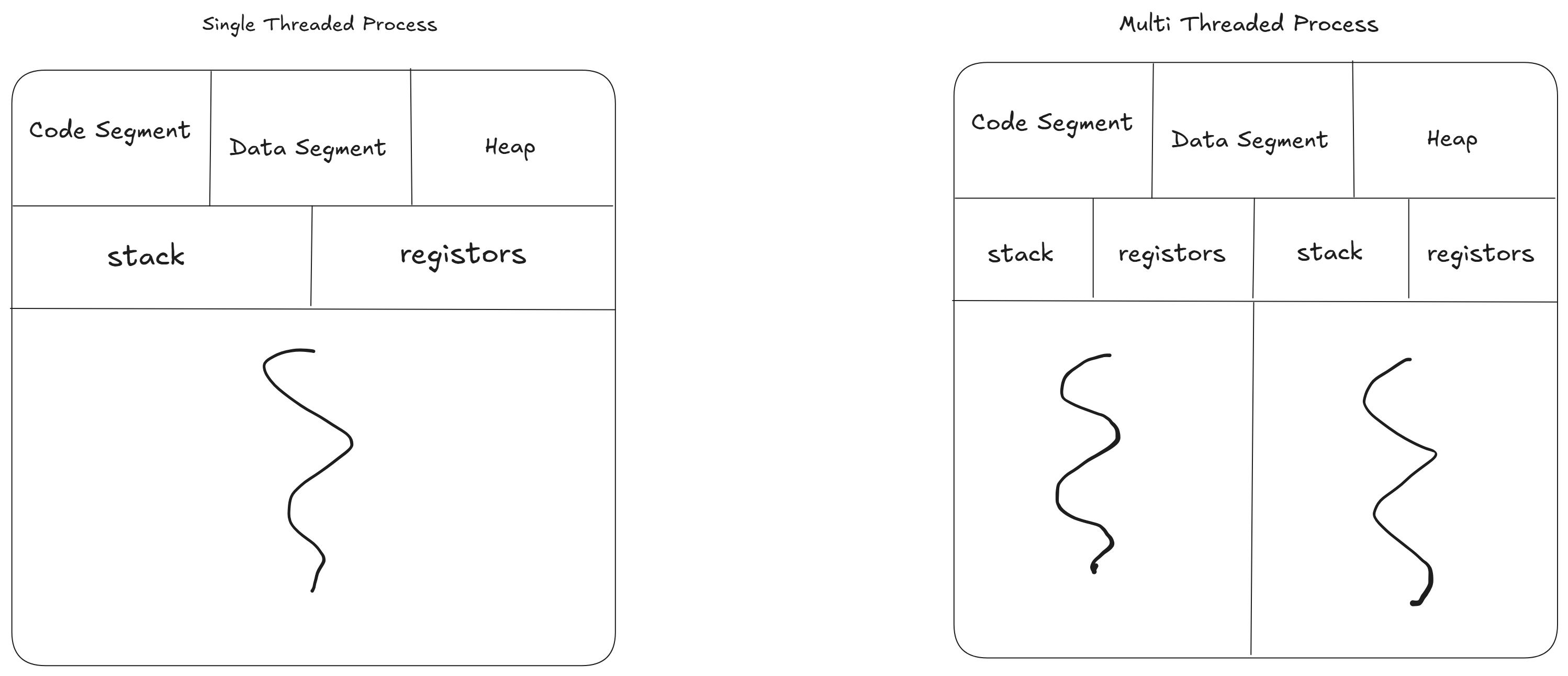
The core of Redis's command processing is single threaded. This means it uses a
single CPU core to process all incoming commands, parse them and execute them. This choice is intentional,as it
eliminates the complexity and performance overhead of multithreading, such as lock contention, race condition and
context switching
To handle concurrency, redis employes an event driven architecture using an I/O multiplexing mechanism. The main thread runs an event loop that uses system calls
epoll, kqueue or IOCP to effieciently observe multiple network sockets
Lets take up a scene in which you are the only one who knows how to cook and chop
veggies, but you can only chop one ingredient at a time(the single redis thread). But you have multiple assistants
(your friends ofc) (the operating system's I/0 multiplexing features, like kqueue and IOCP). You told your friends
to watch all these pots on the stove. The moment one is ready, they should inform you. All this to not waste your
time standing and string at the pots. Instead you chop veggies, when one of your assistant shouts, "pot#3 is boiling
!!" then you immediately stop what ever was being done, deal with that pot and then go back to chopping. So in this
scenario you are the redis main event loop, pots are
client connections and your friends are the operating system's kernel, which
efficiently notifies Redis when a client has sent a request or is ready to receive a response.
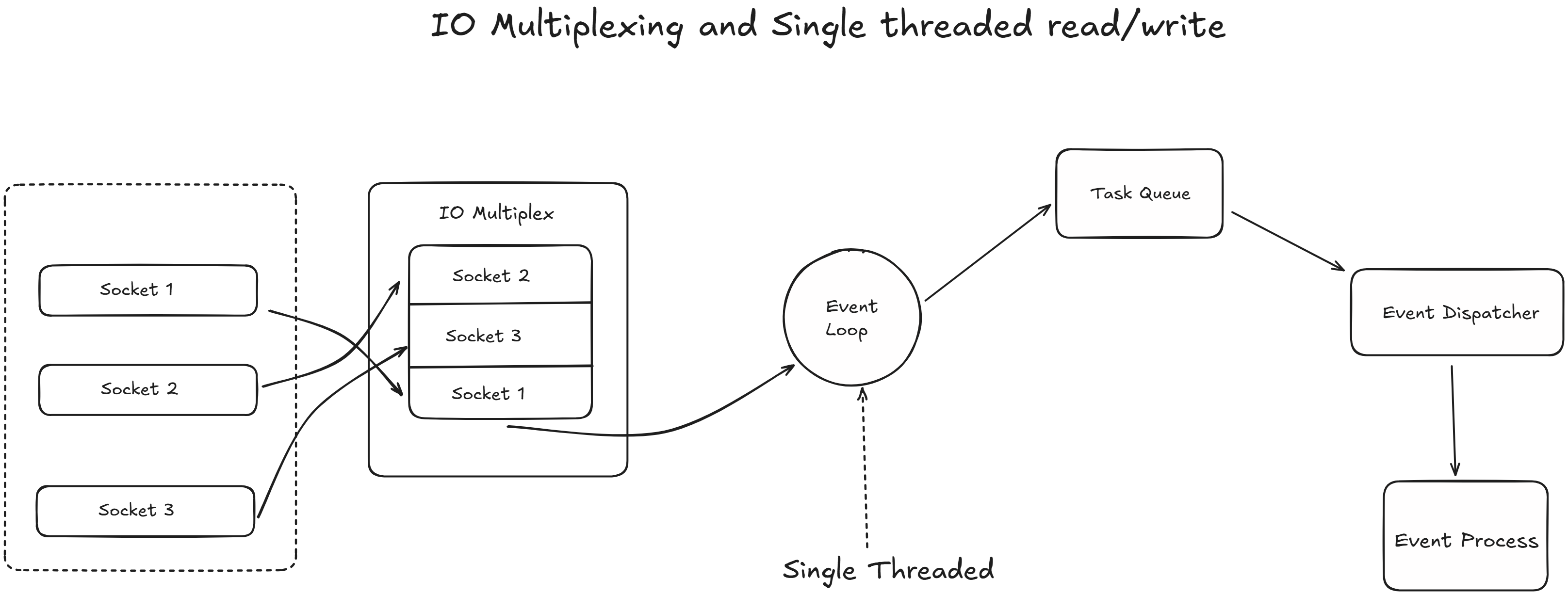
So this is what the actual process looks like :
- The event loop registers all client sockets with the multiplexing API.
- The API notifies the Redis event loop only when a socket is ready for an I/O operation (e.g., a client has sent
data, or a TCP buffer is ready to receive a response).
- The single thread then processes the ready event: it reads the command from the socket, parses it, executes it,
and writes the response back to the socket.
This non-blocking I/O model ensures the single thread is never idle waiting for
network or disk operations. It is always busy processing events, which is how it achieves high throughput and
concurrency with a single thread.
As a engineer you should get this question, that Redis's primary storage is
volatile RAM. What mechanisms does it provide to ensure data persistence and durability, allowing it to recover from
server restarts or crashes?
Lets talk about Persistance
Redis provides two distinct, complementary persistence mechanisms to save the
in-memory dataset to non-volatile storage.
- RDB (Redis Database): This persistence method creates point-in-time snapshots of the dataset. It works by
forking a child process, as described previously. The child process writes the entire dataset to a single,
compact, binary .rdb file on disk. This is efficient in terms of CPU and I/O. The main advantage is that the
resulting file is perfect for backups and allows for fast data restoration on restart. The primary disadvantage is
the potential for data loss: if the server crashes between two configured snapshots, all writes since the last
snapshot are lost.
- AOF (Append Only File): This method logs every write operation command that modifies the dataset. These commands
are appended to an appendonly.aof file. Upon restart, Redis re-executes these commands in sequence to reconstruct
the original dataset. Durability is controlled by the appendfsync configuration:
- always: Syncs after every write. Slowest but safest.
- everysec: Syncs once per second. The recommended default, providing a good balance of speed and safety (max
1 second of data loss).
- no: Lets the OS decide when to flush. Fastest but least safe.
To prevent the AOF file from growing indefinitely, Redis can automatically rewrite
it in the background. It forks a child process that writes the minimal set of commands needed to recreate the
current dataset into a new, temporary AOF file, which is then atomically swapped with the old one.
For maximum durability, it is common practice to use both AOF for near-real-time
persistence and RDB for periodic backups.
Lets take a some good use cases of redis in production grade application
First which is commonly known and used by every developers and engineers out there,
Redis as cache layer.
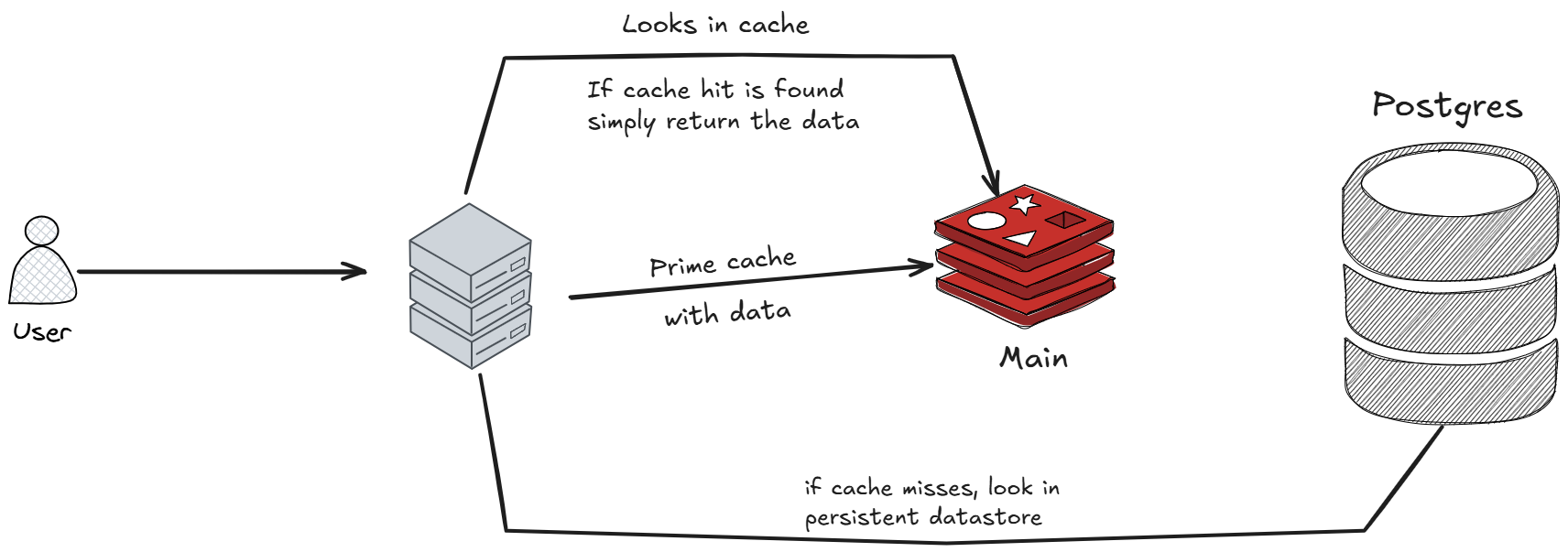
Lets say you have a web application where users frequently view their profiles
fetching this data from a disk based database like MySQL everytime can be slow instead we can use redis to cache the
user profile data so when a user requests their profile the application first checks redis, if the desired data is
in redis it's a cache hit it is returned immediately, if the data is not in redis
it's a cache miss the cache miss the application fetches it from the primary database
stores it in redis and then returns it to the user. The data in redis can have TTL or
Time To Live so it can automatically expire after a certain time for example say 15
to 20 minutes to ensure fresh is there all the time.
Second scenario is using Redis as Database specially
for use cases where speed and low latency are very much important, just like building a gaming application.
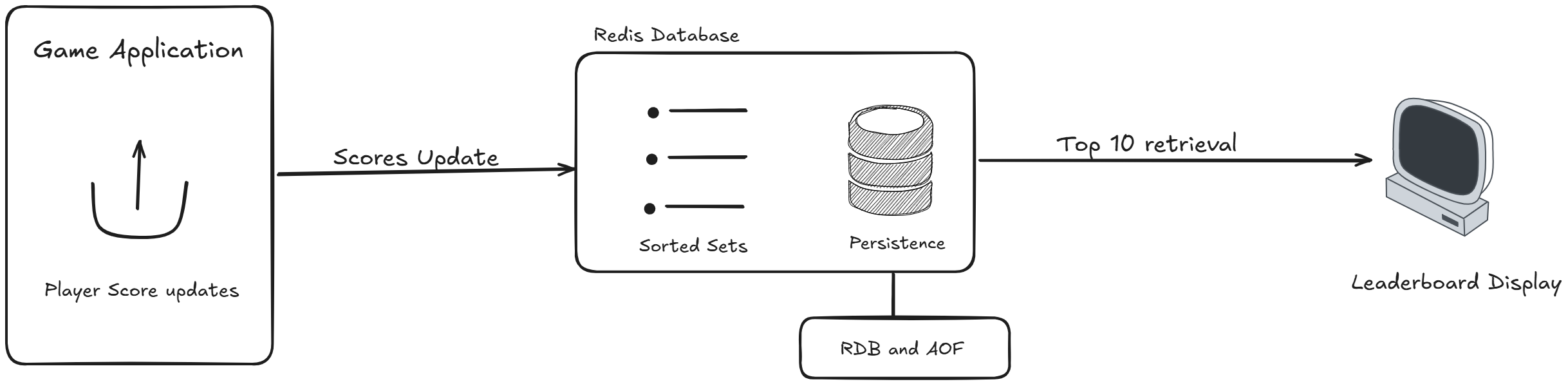
Here we need to maintain a realtime leaderboard where player scores are constantly
updated and we need to display the top 10 players instantly. So here we can use redis as sorted set data structure
to store player scores, each player score is added to the sorted set with their ID as the key and the score as the
value this automatically sorts the scores so we can quickly retrieve the top 10 players using a single command like
ZREVRANGE leaderboard 0 9. Redis can then process this data to disk using RDB or AOF
to ensure durability.
What internal data structures and optimizations allow it to store complex data
types with minimal overhead?
Memory Management
Redis's memory efficiency stems from its use of custom, highly-optimized data structures
and dynamic encoding strategies.
- Redis does not use standard C-style null-terminated strings. Instead, it uses its own SDS structure. An SDS
(Simple Dynamic String) is a struct that contains metadata (like the length of the
string and the total allocated memory) followed by a byte array holding the actual data. This design provides
several advantages which are
- O(1) Length Lookup: The length is stored directly in the struct, avoiding the need to scan the entire string.
- When an SDS is grown, it allocates more memory than immediately required (e.g., 1MB of free space for a 1MB
string), so subsequent appends may not require a new reallocation and memory copy.
- Redis dynamically switches internal encodings for a data type based on the data's size and content to save
memory. For example
- A Hash with few, small elements might be encoded as a ziplist (or listpack in newer versions), which stores
all elements in a single, contiguous block of memory with no pointers, drastically reducing overhead. As the
hash grows, Redis automatically converts it to a full hashtable for better performance on large datasets.
- A Set containing only integers may be encoded as an intset, a specialized data structure that stores integers
in a sorted array without any overhead.
- Small Sorted Sets can also be encoded as a ziplist.
That's all from my side for the very first part of deep diving into redis, we got
more parts for redis to explore for next few blogs :) Hope I was able to add few value to your today's learning :)